

Greetings Husky Satellite Lab Community!
Welcome to 2026, where we hope you all are starting the new year on a great start. We at Husky Satellite Lab (HSL) have had quite the past few months, so before we start trail blazing through Winter Quarter we’d like to take some time to give some explosive updates on our endeavors and escapades in Autumn 2025.
So, without further ado, let’s jump right in, shall we?
HOLD UP!
HSL’s Crowdfunding Campaign Beings TODAY
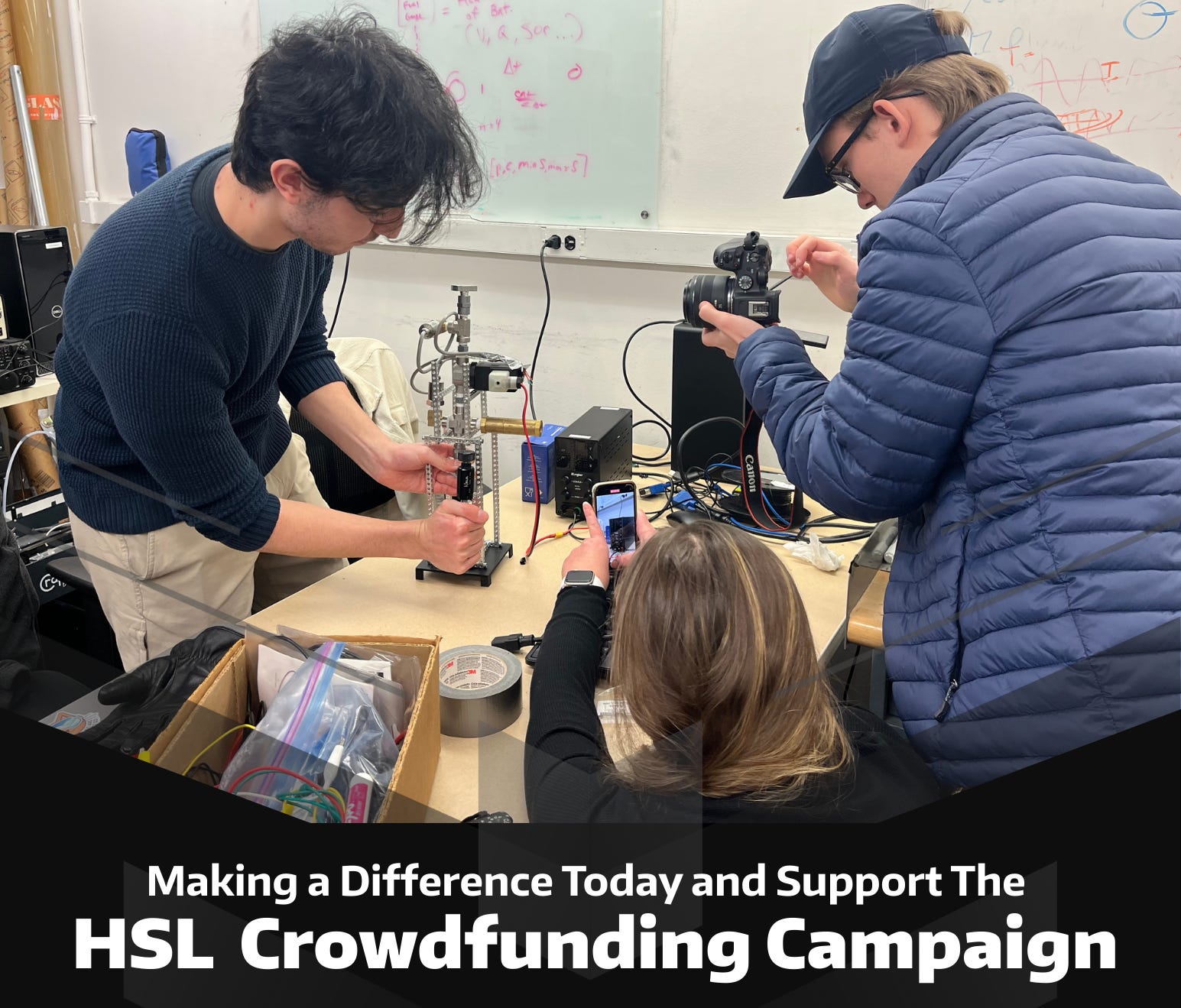
With four divisions, two satellite missions, experimental balloon launches, and cutting edge propulsion research, HSL is booming with student engineering experiences going into 2026. To support our incredible students and the work they do, we at HSL are excited to announce that our Winter Crowdfunding Campaign has officially kicked off!
Whether you’re a family member of a current member, an HSL alumni, a student or staff member at the University, or a wonderful person excited to help the next generations of engineers, please consider making a donation. All proceeds will go directly to getting tools and resources to our students and their incredible missions.
Any donation would be appreciated, and if you’re ready to help us reach the stars (literally), please donate to the AA Make A Gift Page under the A&A Cubesat (AACT) Fund. Our goal this campaign is to bring in $1,000 by January 31st so spread the word and lookout on our socials (LinkedIn and Instagram) for updates on progress and milestone prizes!
HS-2 and the Preliminary Design Review
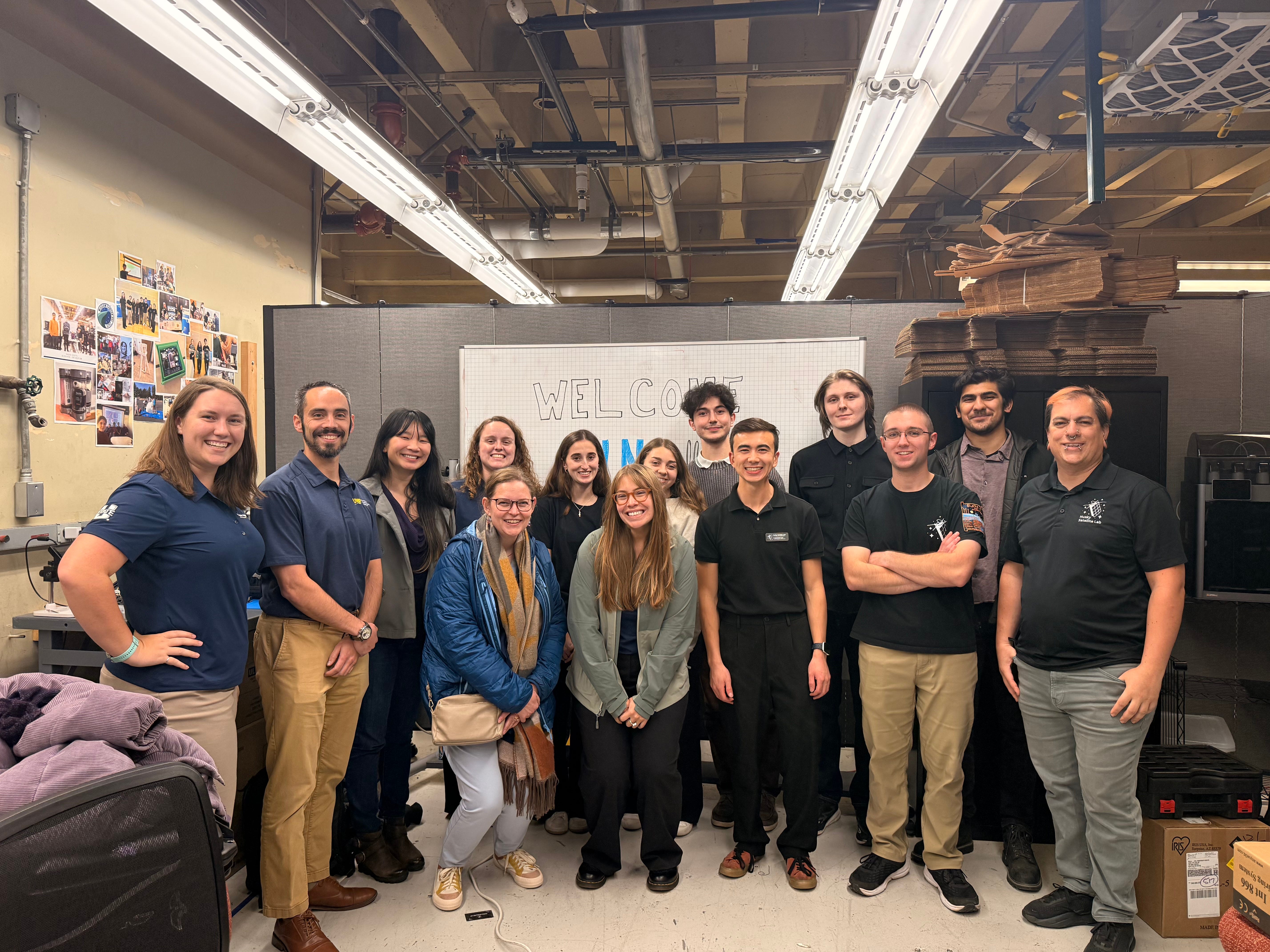
This was a very momentous quarter for the HS-2 crew as they wrote, submitted, and presented the Preliminary Design Review (PDR) for the HuskySat-2 mission as part of the University Nanosatellite Program! It was an invaluable experience to have engineers from the Air Force Research Laboratory, Blue Origin, and Space Dynamics Laboratory review their work and share technical feedback on the mission.
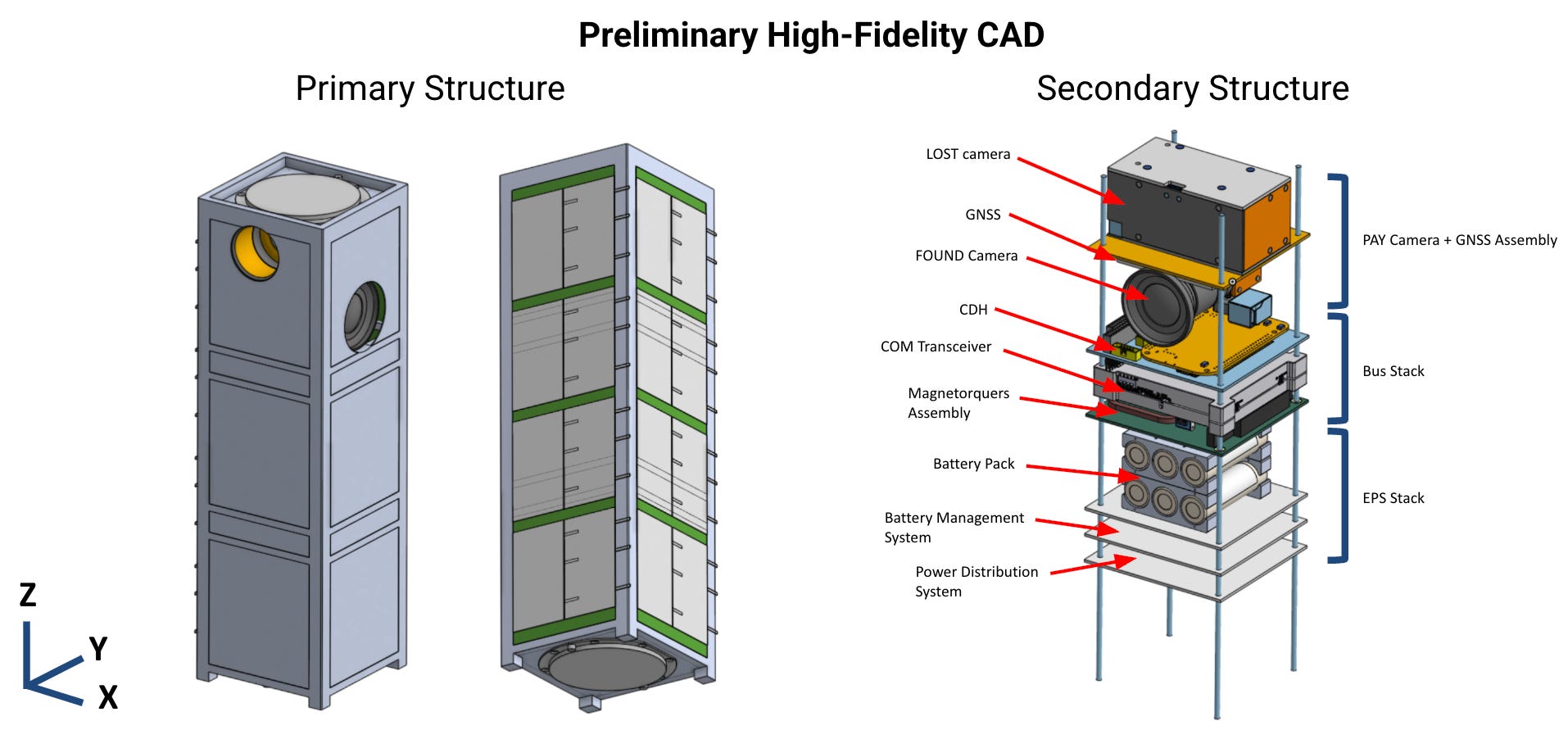
Now that the Autumn quarter is a wrap, the division plans on working towards the Critical Design Review (CDR), focusing on the final build-ready specifications, drawings, and Bill of Materials (BOM) before manufacturing and testing of a Flat Sat and growing ever closer to launch.
PHAT-3 Ramping Up To Completion
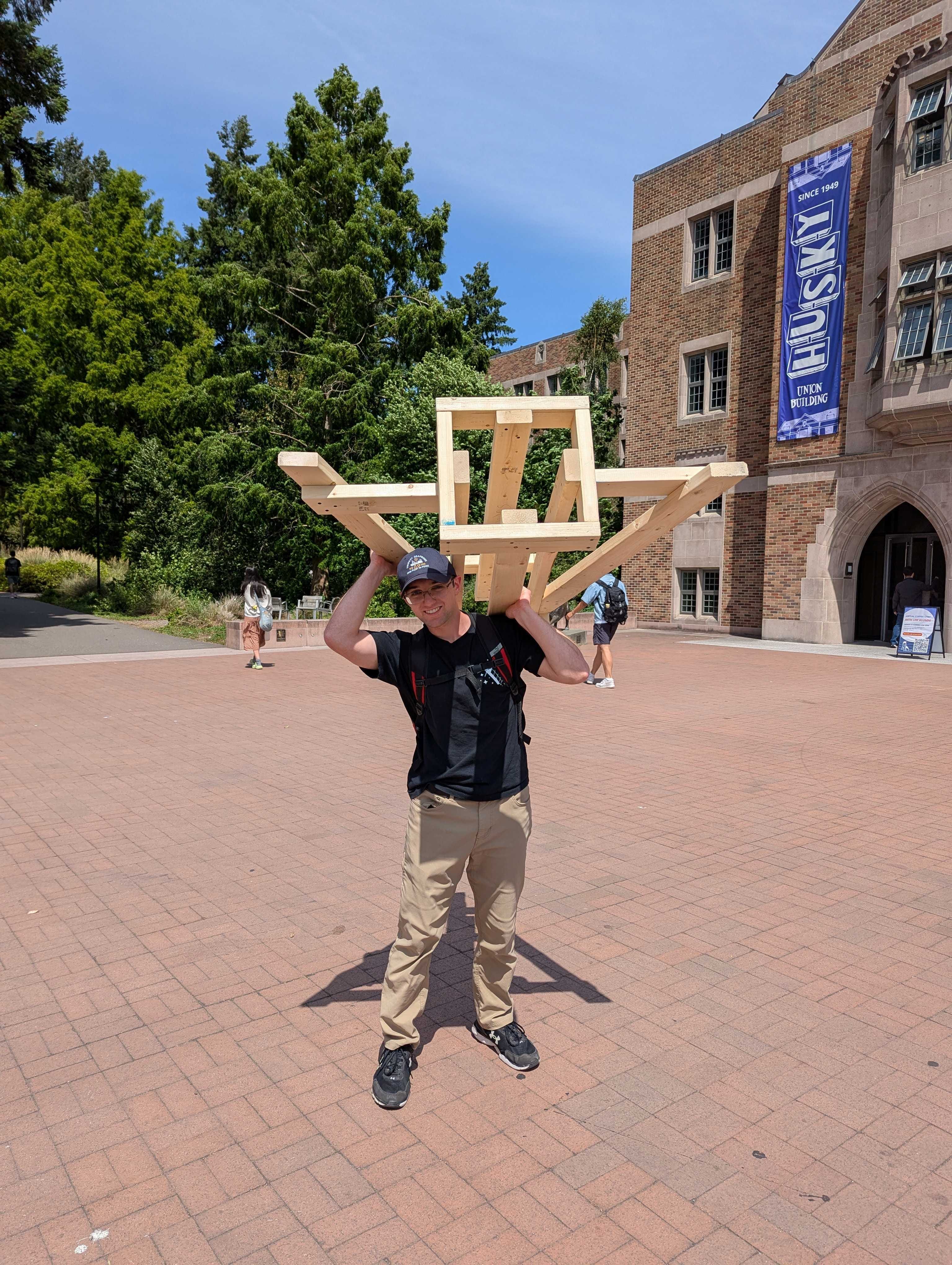
The original plan was to launch PHAT-3, our latest high altitude balloon, by the end of Autumn 2025, but unforeseen delays when purchasing our latex balloon and high-altitude parachute have pushed that launch date to early Spring of 2026. This delay was not without benefits, though. Spring is generally a better time to launch a balloon due to more favorable weather conditions. After much hard work by Marc Alwan and Marcin Anforowicz, we now have the payload mostly programmed, with additional features, such as relaying static images and GPS data over LoRa radio, planned for Winter 2026. The payload antenna is also getting an upgrade. Shriya Tiku is incorporating a longer 915MHz whip antenna near the bottom of the payload for extended communication ranges. Now that HSL has its own 3D printer, development cycle time has decreased as well. The current goals for PHAT-3 over Winter 2026 are as followed:
Program additional payload software features and improve error handling
Write a basic ground station program to save downlinked data
Test payload across larger distances (i.e. campus) using a YAGI antenna with the ground station code
Finish 915MHz whip antenna design and selfie camera mounts
Reprint all mechanical parts and complete final payload assembly with preflight checks
Manufacture our own inflation nozzle for filling the latex balloon
Finalize transport and launch logistics for Spring 2026
By the end of Winter Quarter, PHAT-3 will be ready to launch in the Spring of 2026!
HS-3 Analysis Cycles + Joining A New Program
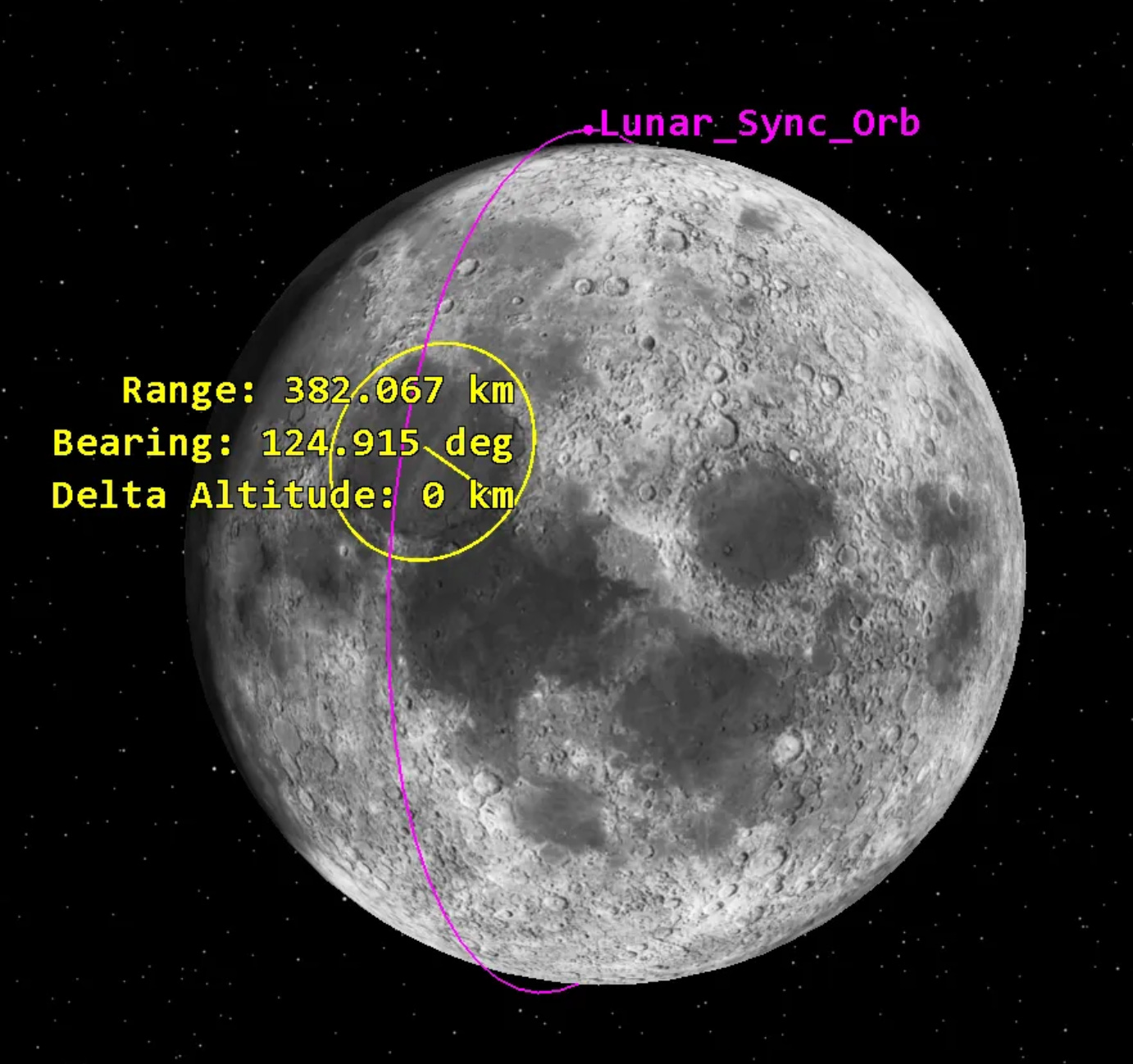
HS-3, our lunar orbiting satellite mission, has truly gotten on its feet this quarter. As the newest mission to the HSL roster, the Division is taking a novel approach to mission design and planning via the “ Design Analysis Cycle” mission planning framework. A design analysis cycle is an iterative process used to shape and improve a mission design by making a shared set of assumptions, analyzing the mission against them, and refining the results. The team first agrees on key objectives and “fair” initial parameters, then works through the mission as if those assumptions are correct. This keeps all teams aligned and working from the same baseline.
As analyses are completed, errors, conflicts, or unrealistic assumptions are identified. The parameters are then adjusted in a reasonable way, clearly communicated to everyone, and the process is repeated. The cycle helps to catch major issues and converge on a realistic, well-informed mission design, with systems, science, and orbital teams each contributing from their domain.
Using this framework, the division has made extensive progress on their overall mission parameters. But that’s not all that’s fueling the division! In September, HS-3 officially joined the C3: COSMIC Capstone Challenge, a competition between College teams throughout the nation to develop conceptual missions & designs for spacecraft operations on the lunar surface and in lunar orbit. Paired with exceptional mentors including Victor Lin (from the Aerospace Cooperation) and Tim Kienberger (the CEO of Kien Space Ventures), the division presented their first mission presentations for C3 reviewers in December, gaining valuable feedback on their mission narrative and mission parameters which they plan to dive into this quarter. Check out more about C3 by clicking on the button below!
Propulsion Updates
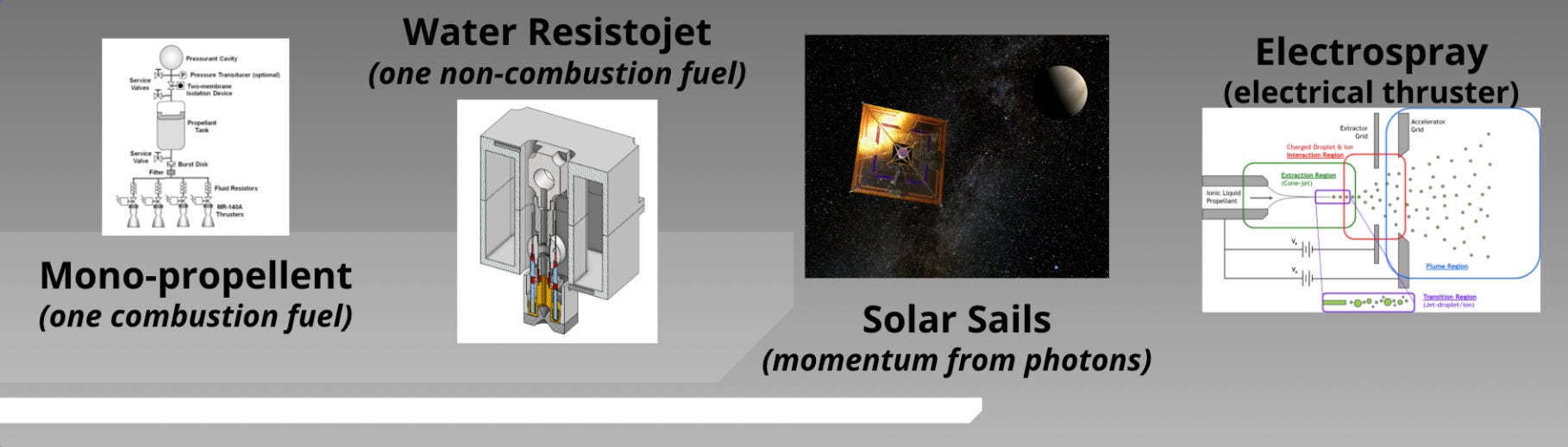
Missions concept definitions complete! FIVE systems in the works, each with a novel and groundbreaking vision! Our Electrospray team is aiming to make extreme improvements to the accuracy of attitude control on CubeSats in order to enable future astrophysical and cosmic research. Solar sail is making headway by investigating creative deployment mechanisms and sail materials for long-range-long-period maneuvers. Monopropellant and Hot Gas teams are going green with the use of more environmentally friendly sources of propulsion while maintaining high reliability in system performance! Electrolysis is aiming to redefine what’s possible for large CubeSat maneuvers through a water-based bipropellant system. The teams are all working on parallel pipelines of requirement analysis, thermodynamic analysis, and design. Additionally, first principle analysis, schematics, and designs of all systems have been completed. Teams are progressing rapidly and efficiently, some working towards publishing papers while others are getting closer to their first prototypes!
To Space and Back, Welcome Home CHNOOK
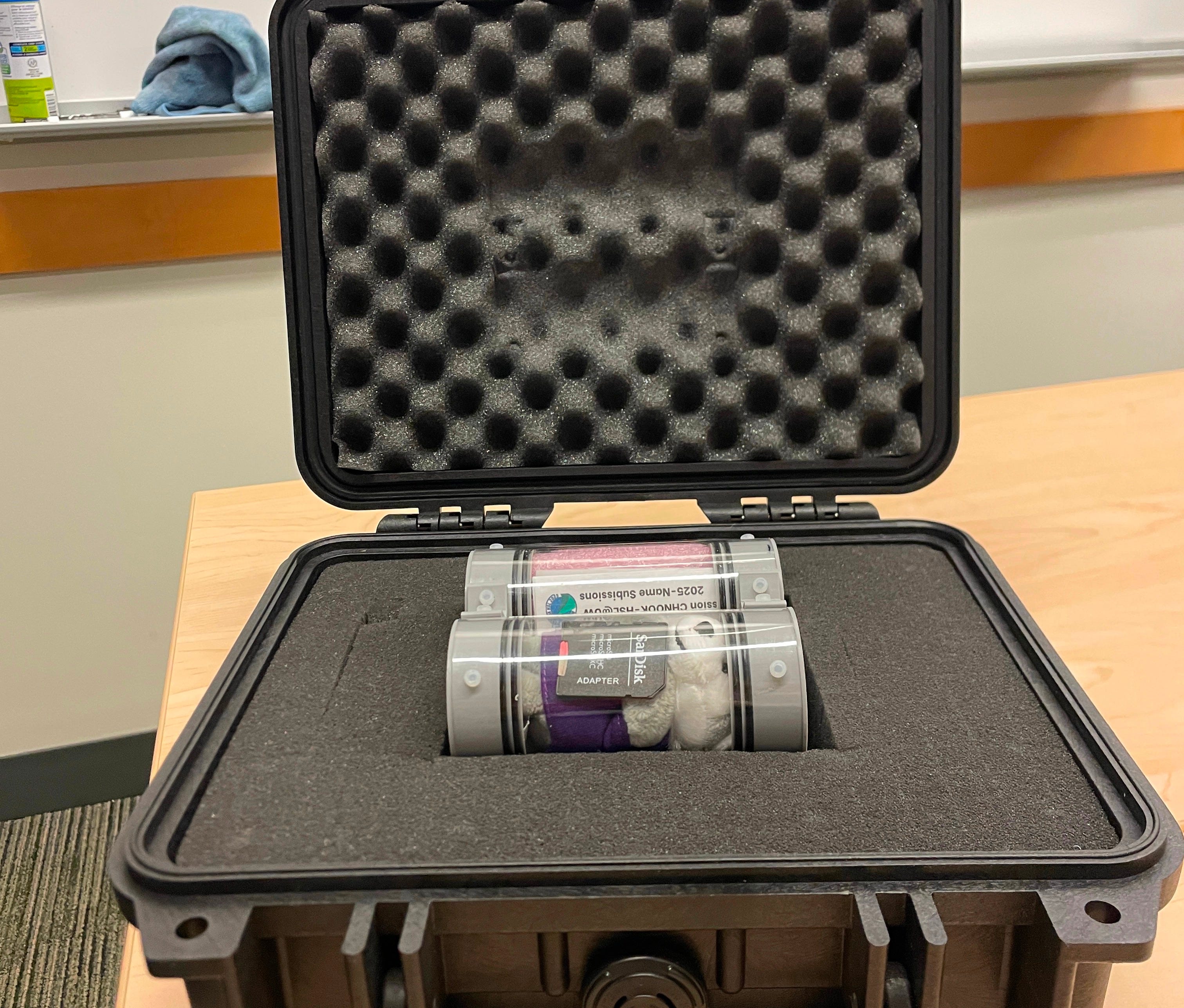
On September 24th, 2025, the payload mission known as Mission CHNOOK (which was launched with Blue Origin on September 18th, 2025) was successfully received and opened by HSL members. All components were undamaged, including the delicate DNA Origami Experiment and HS-2 structural components. As of now, the biology experiments are being tested at the University of Victoria, while the remaining payload elements (including the Husky plush, SD card, name list, and HS-2 structural components) are being secured within the lab. This won’t be the last for CHNOOK’s ventures, so stay tuned!
HSL Business and New Industry / Community Engagement
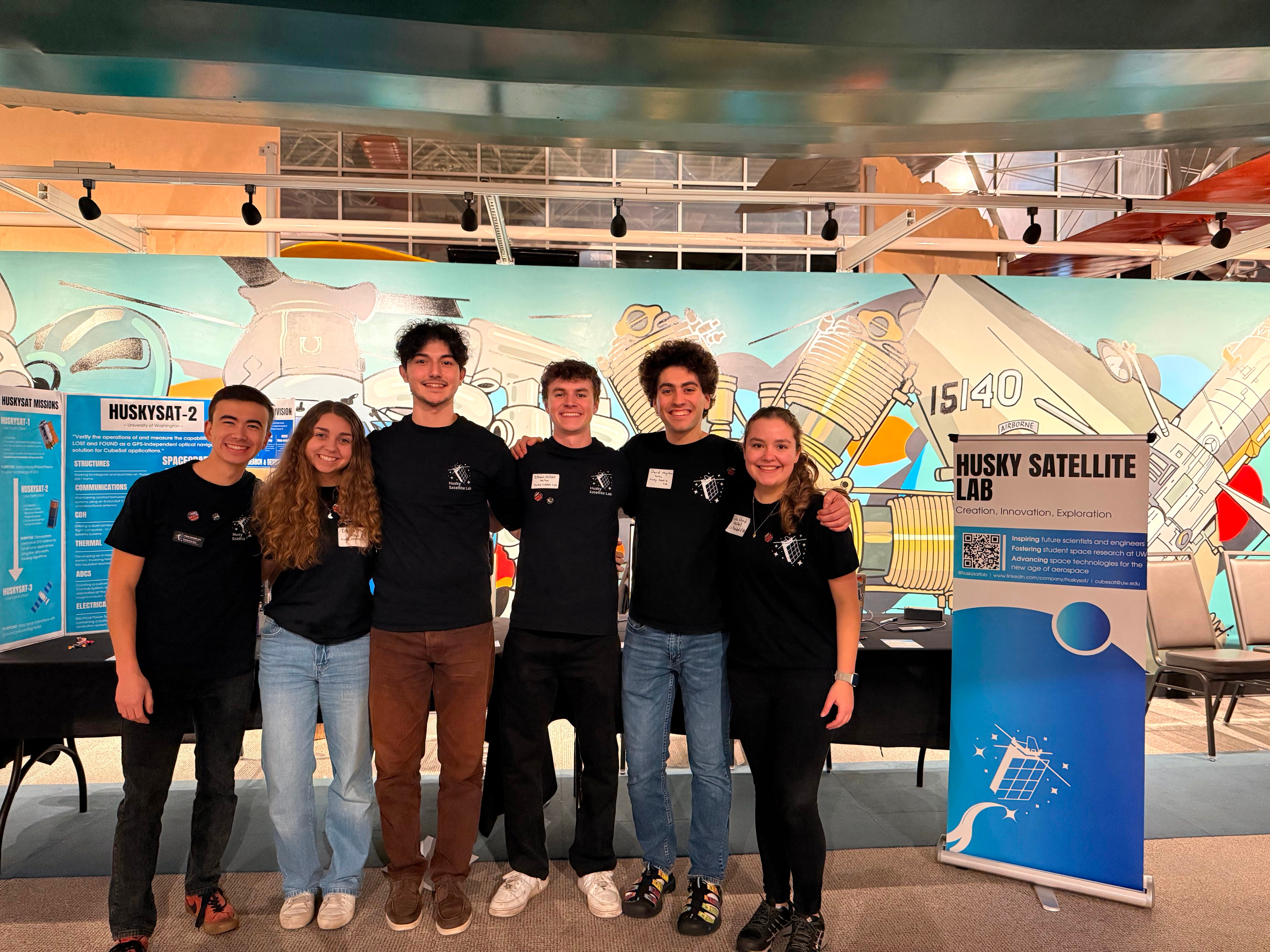
Running off the success of CHNOOK, HSL’s Business Division has been ramping up the community and social engagement. The Lab was honored to welcome recruiters and engineers from SpaceX, Blue Origin, and Anduril to forge connections with our members looking for internships and industry experience. In addition to outreach fairs, the lab has been fortunate to begin building relations with the Seattle Museum of Flight. In December, outreach members tabled at the Museums’ First Thursday Open house, where they interacted with Seattle community members on everything CubeSat. Keep a lookout for more partnerships between our organizations in the future!
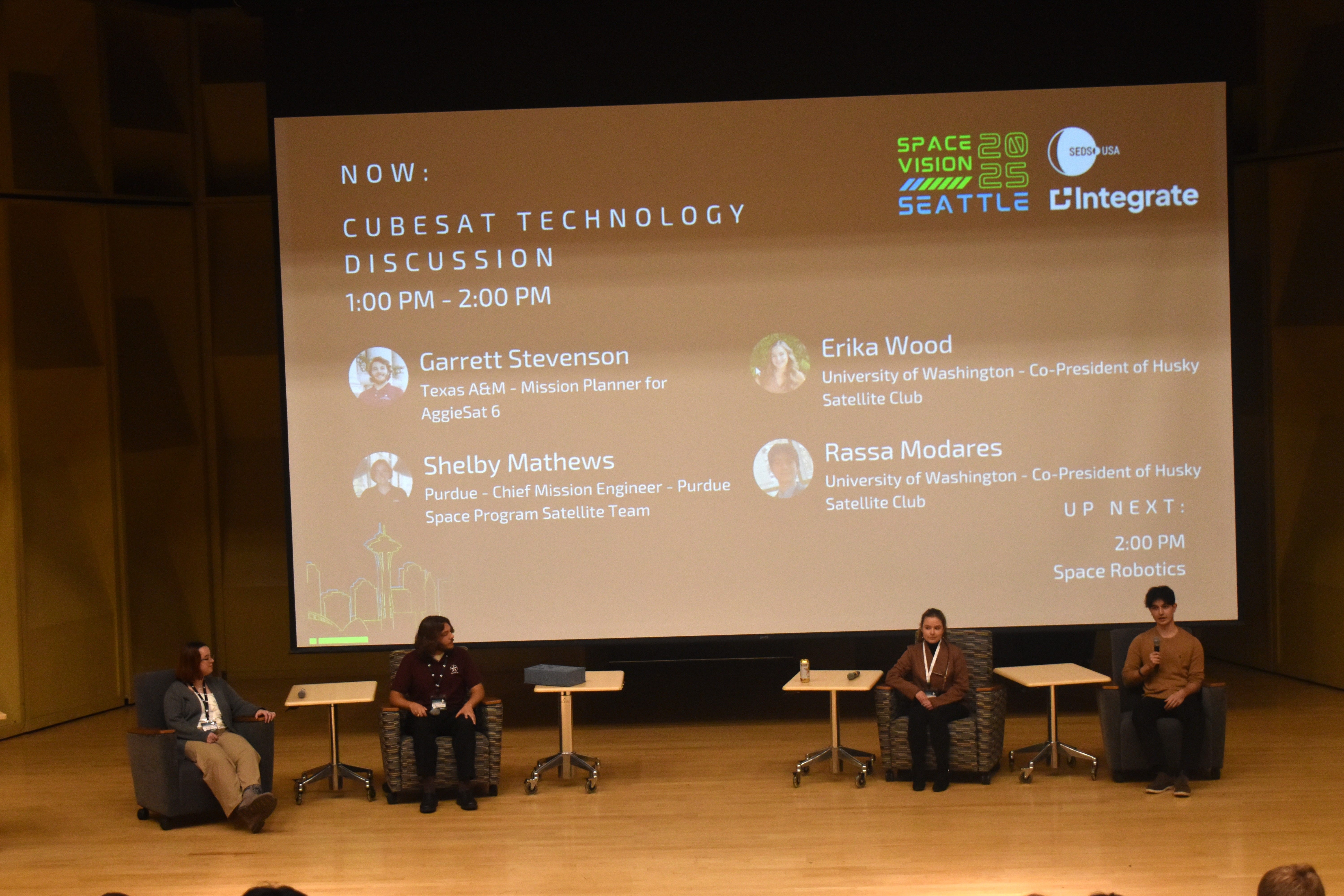
HSL also had the opportunity to send both of its presidents, Erika Wood and Rassa Modares, to speak at SpaceVision2025 on the CubeSat Technology Panel, representing the Husky Satellite Lab at the University of Washington. Along with University presenters Garrett Stevenson, and Shelby Mathews, they discussed the current role of Cube Satellite technologies within UW and insight into running satellite operations at an undergraduate and graduate level.
In addition to industry engagements, the lab has been active on campus during recruiting season, interacting with students across the University through THE CEO Engineering Launch and HSL community workshops.
In Winter Quarter, HSL will be launching a new outreach program under the new HSL Ambassadors Program featuring a variety of engaging events and interactive opportunities designed specifically for K–College audiences. If you are a K–College educator interested in getting your students more involved with CubeSats and space, we encourage you to reach out to us at cubesat@uw.edu, we’d be happy to connect!
HSL Autumn Fundraisers
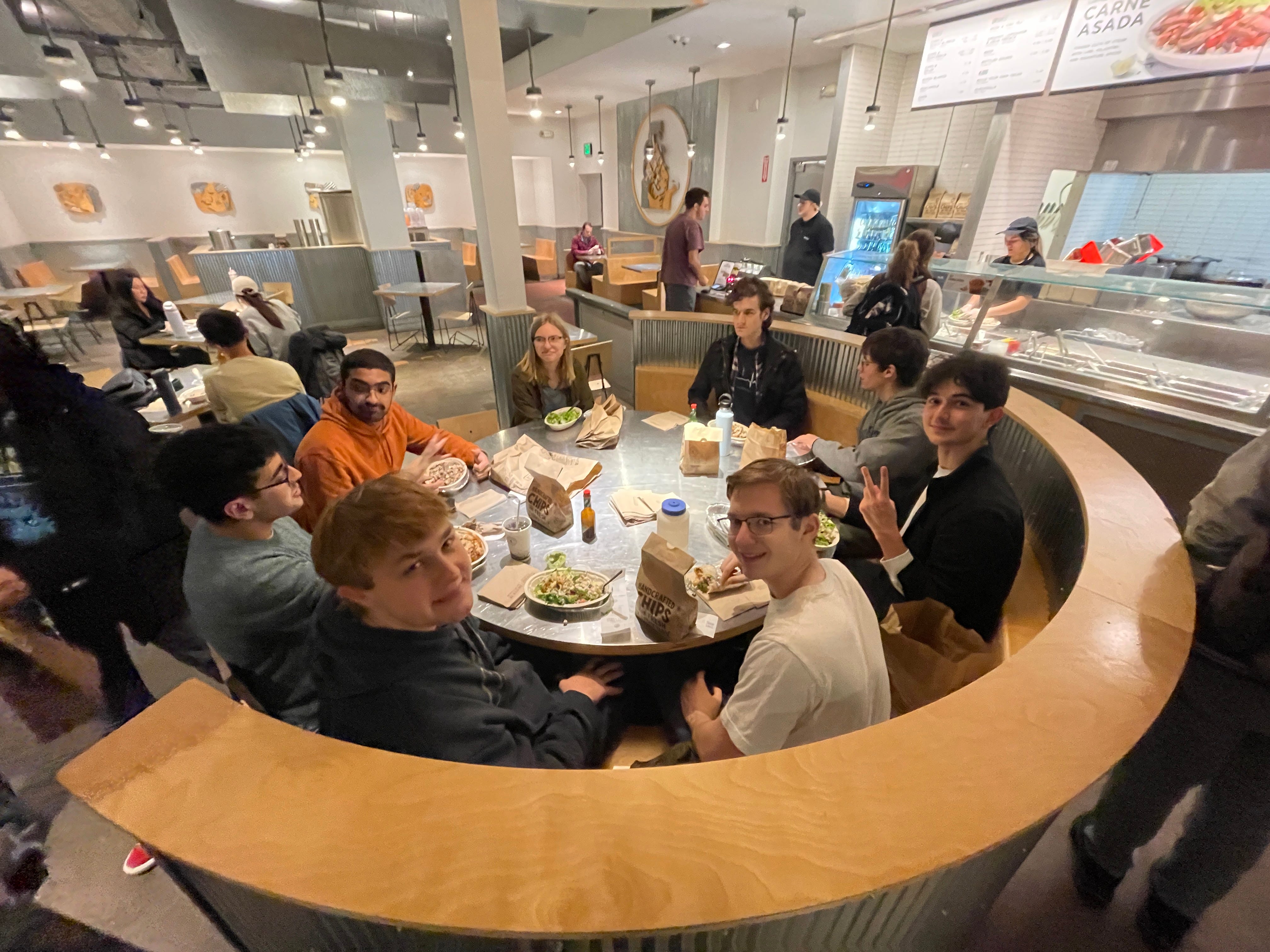
Last quarter, HSL had two nifty fundraiser events to raise money to keep our lab healthy and trailblazing the future of space tech. One of those fundraisers was the HSL Chipotle Fundraiser, which raised over 200 dollars for lab initiates (way to go team!). In addition to Chipotle, HSL ran a Pie a Lead Fundraiser in December, which raised a total of 250 dollars for lab initiatives and missions. When all the votes were cast, the HS-2 Chief Engineer, Catherine Collison, and one of the lab Presidents, Rassa Modares, were voted to be heroically pied in the face.
Thank you to everyone who supported the fundraisers (and thanks Catherine and Rassa for being willing to be pied!).


More Things To Look Forward To In Winter Quarter
New Winter Quarter Opening at HSL
HSL is excited to announce that we will be looking to onboard a new position in Winter Quarter. The HSL Auditor, under the Business Division, application will be announced on LinkedIn in the next coming weeks. Other technical positions in different divisions may be offered as well.
So, if you’re an aspiring student at the University of Washington pursuing an undergraduate or graduate degree, please consider applying. These application will be open till filled, so don’t wait to apply when they open!
HSL MERCH?!?!?!
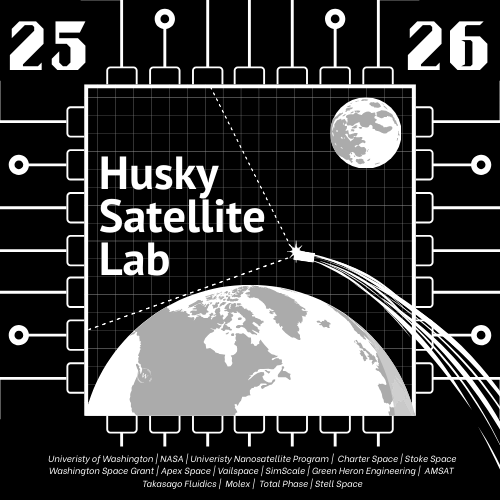
Sweatshirts, T-Shirts, and stickers… that’s right, it’s almost time to purchase your HSL merchandise on sale in late January. Keep an eye on our socials when the products go on sale and get ready to gear up in all that HSL swag 😎.
And So Much More
Well that was A LOT of cool info wasn’t it? But don’t worry, HSL has so much more in store over the next quarter. We can’t wait to continue sharing our news and updates here on the HSL Newsletter.
If you are interested in providing assistance to help us complete our missions, please fill out this interest form.
Thanks for reading Husky Satellite Lab Newsletter! Subscribe for free to receive new posts and stay updated.
Amazing writeup!