


Greetings Husky Satellite Lab Community!
Cherry blossoms are in full bloom ver in these parts and with them an exciting new chapter for the Husky Satellite Lab (HSL). As campus wakes up for the season, our team is already in motion, pushing forward on some wickedly cool projects and missions.
Before we charge full speed into Spring, we’ve got some major updates to share from our latest endeavors and recent milestones heading into Spring 2026.
From NASA programs to new membership applications, let’s jump right in!
HS-2: Spring Interim Review and F’
Though HS-2 finished their PDR review in the fall, the team has not been slowing down! Throughout Spring quarter, HS-2 has been preparing for The Spring Interim Review (SIR), an interim review with our sponsors and mentors at The University Nanosatellite Program. In this presentation, the Payload, Electrical Power System (EPS), and Communications subsystems shared their current progress and received valuable feedback on key questions and areas for improvement.
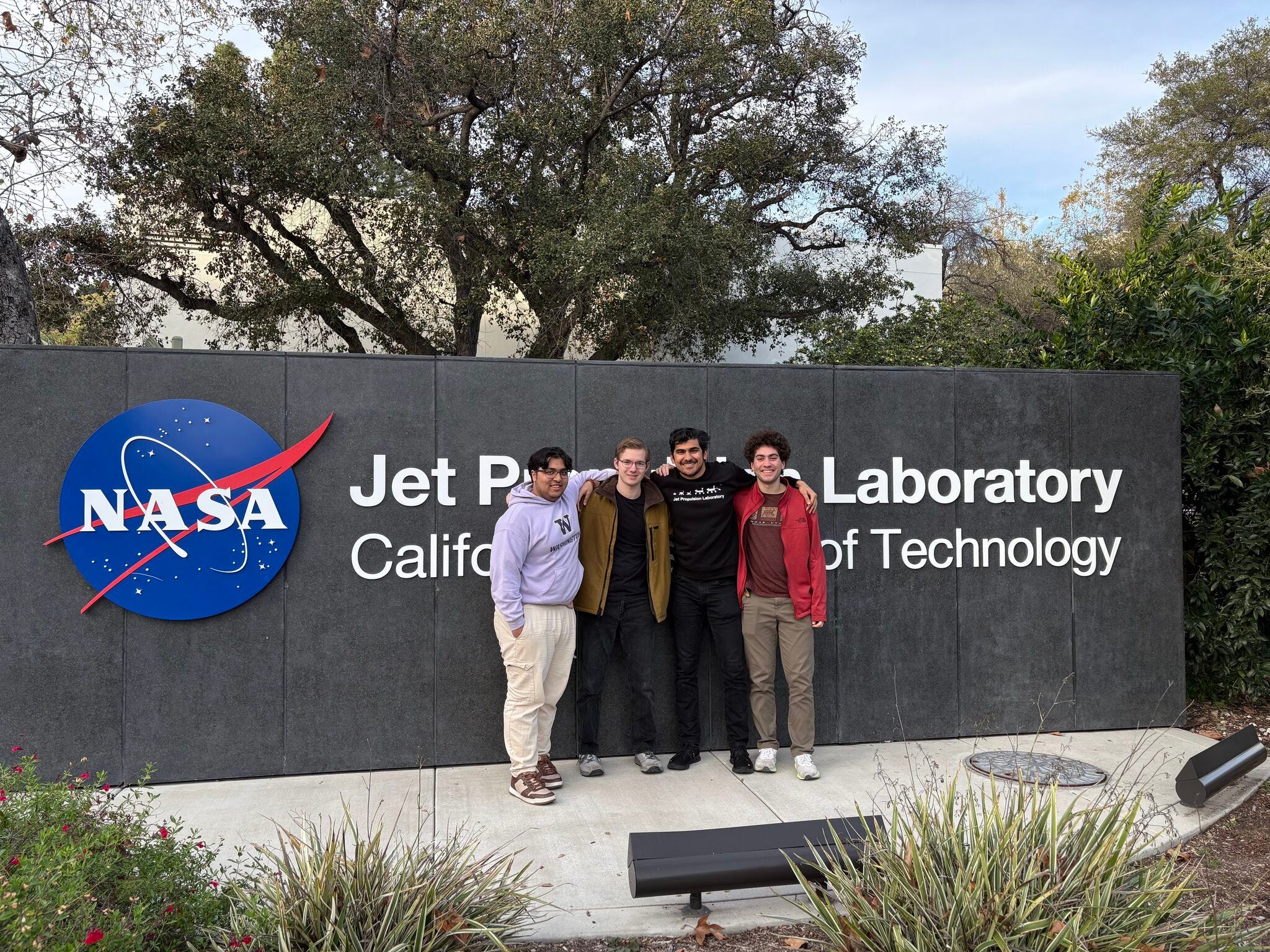
In addition to these reviews, members of the HS-2 Division (as seen in the image above) had the opportunity to attend the NASA Jet Propulsion Laboratory Flight Software/F´ Development Workshop in Pasadena, California. There, they developed key skills in F´, a software framework designed for the rapid development and deployment of spaceflight, embedded systems, and instrumentation. The HS-2 team has since been sharing this knowledge with subsystem members and has begun implementing the framework across CubeSat software systems.
As Spring continues, much of their hardware is arriving, which means lot more activity in the lab as testing and system design for summer test assemblies.
PHAT-3: Spring Quarter Launch??
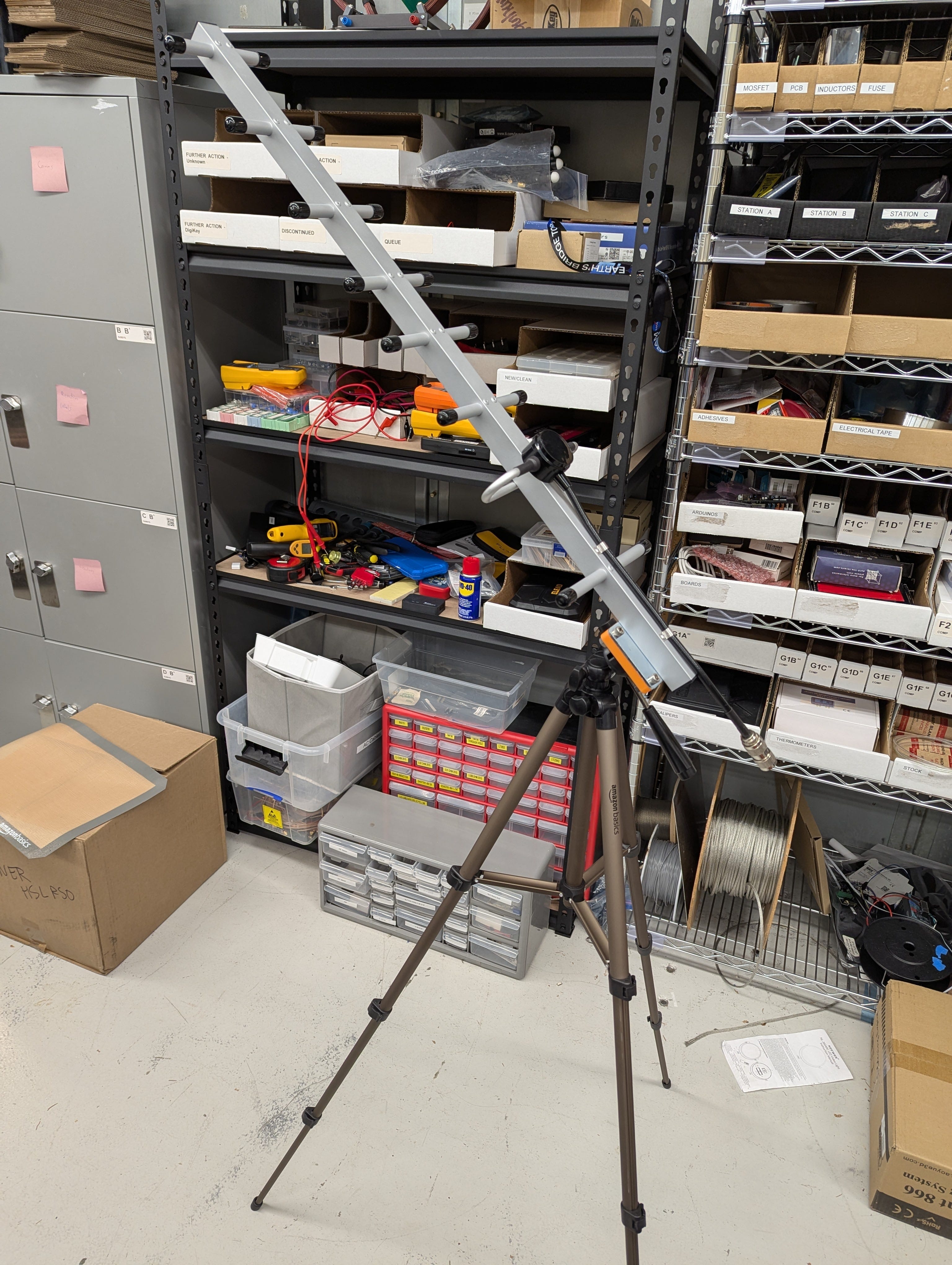
The PHAT-3 project will be wrapping up in just a few weeks, and the team has been making steady progress toward final preparations. We recently pulled the helium transportation stand out of storage and gave it a thorough cleanup and inspection to ensure it is ready for safe and reliable use during launch operations. This marks an exciting step forward as we transition from development and preparation into the final operational phase of the project.
At the moment, we have not yet finalized a launch date or location, but that decision should be coming very soon as coordination with logistics and safety teams continues. Right now, a major focus is on completing the remaining safety paperwork and finalizing operating procedures to make sure all systems and processes meet required standards. Once these items are finished, we will be in a strong position to move forward with scheduling and executing the launch.
Overall, the project is coming together well, and we are looking forward to closing out PHAT-3 with a safe and successful launch in the near future!
HS-3: Concept and Systems Reviews
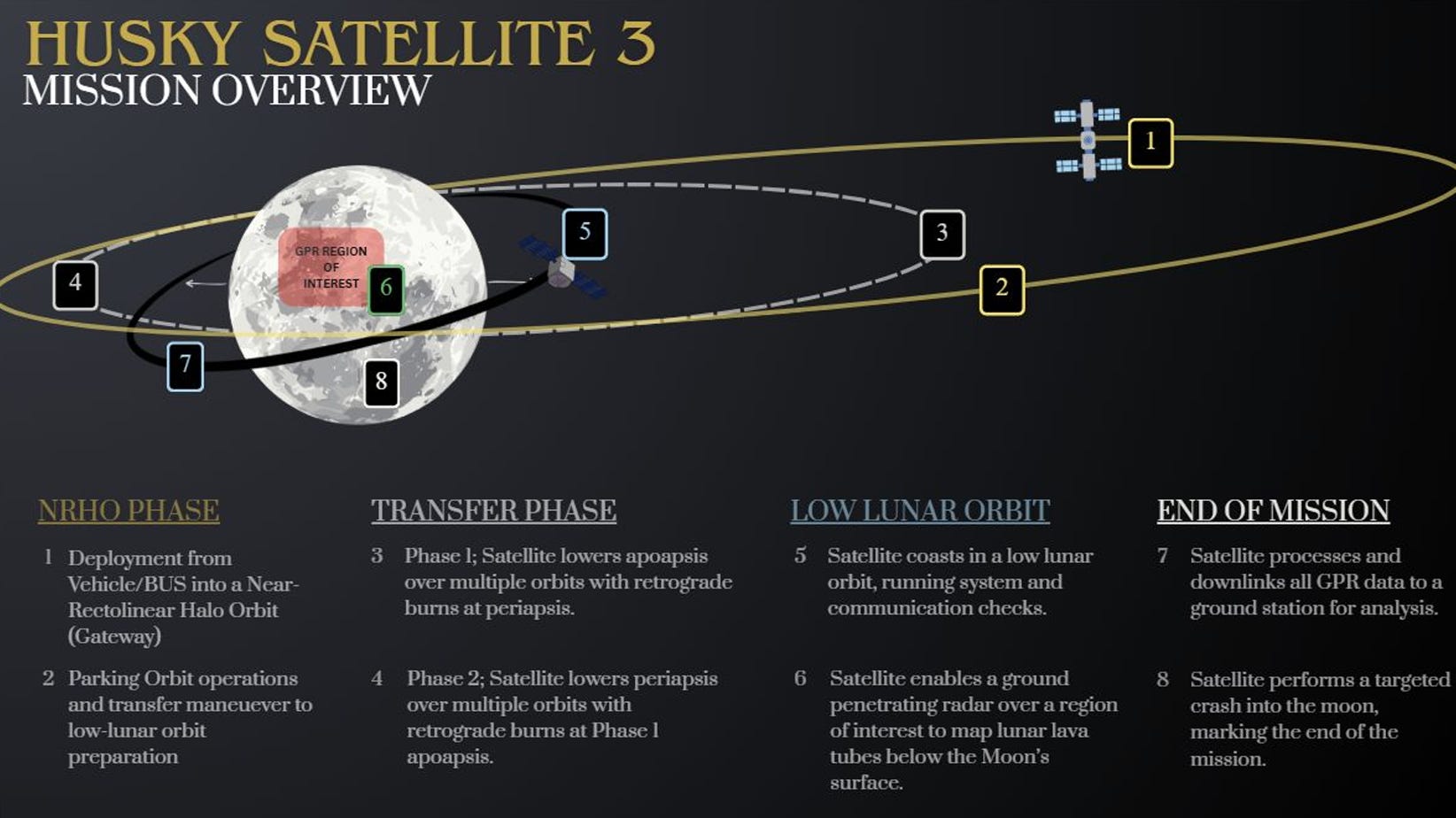
HS-3 hit the ground running in Winter Quarter, diving into orbital simulations, mission operations, ground penetrating radar analysis, satellite budgets, and overall mission requirements. Alongside this work, we are excited to announce that the team is hosting a UW Aeronautics and Astronautics Senior Capstone Project focused on the design and development of the Ground Penetrating Radar System. With guidance from our Science team and the support of the senior capstone group, we are aiming to finish Spring Quarter with a well-defined radar system that meets the extreme constraints of the HS-3 mission.
Along with the capstone developments, the team hosted two design reviews this Winter, leading up to the Concept and Systems Review in early March. During this review, members from across the HSL Divisions, along with mentors from Aerospace Corp, Boeing, and Northrop Grumman provided valuable feedback on our mission outline and current allocated budgets. It was an exciting opportunity for growth and collaboration across teams.
Now, with a firm outline of mission goals, objectives, and budgets, the Division is preparing to open additional subsystems, including structures, flight computer, thermals, and more, as the project moves into the next phase of CubeSat design. The momentum is building, and the mission is starting to take shape. Keep an eye on the moon, folks!
Propulsion Division: ORBITS and Papers Galore
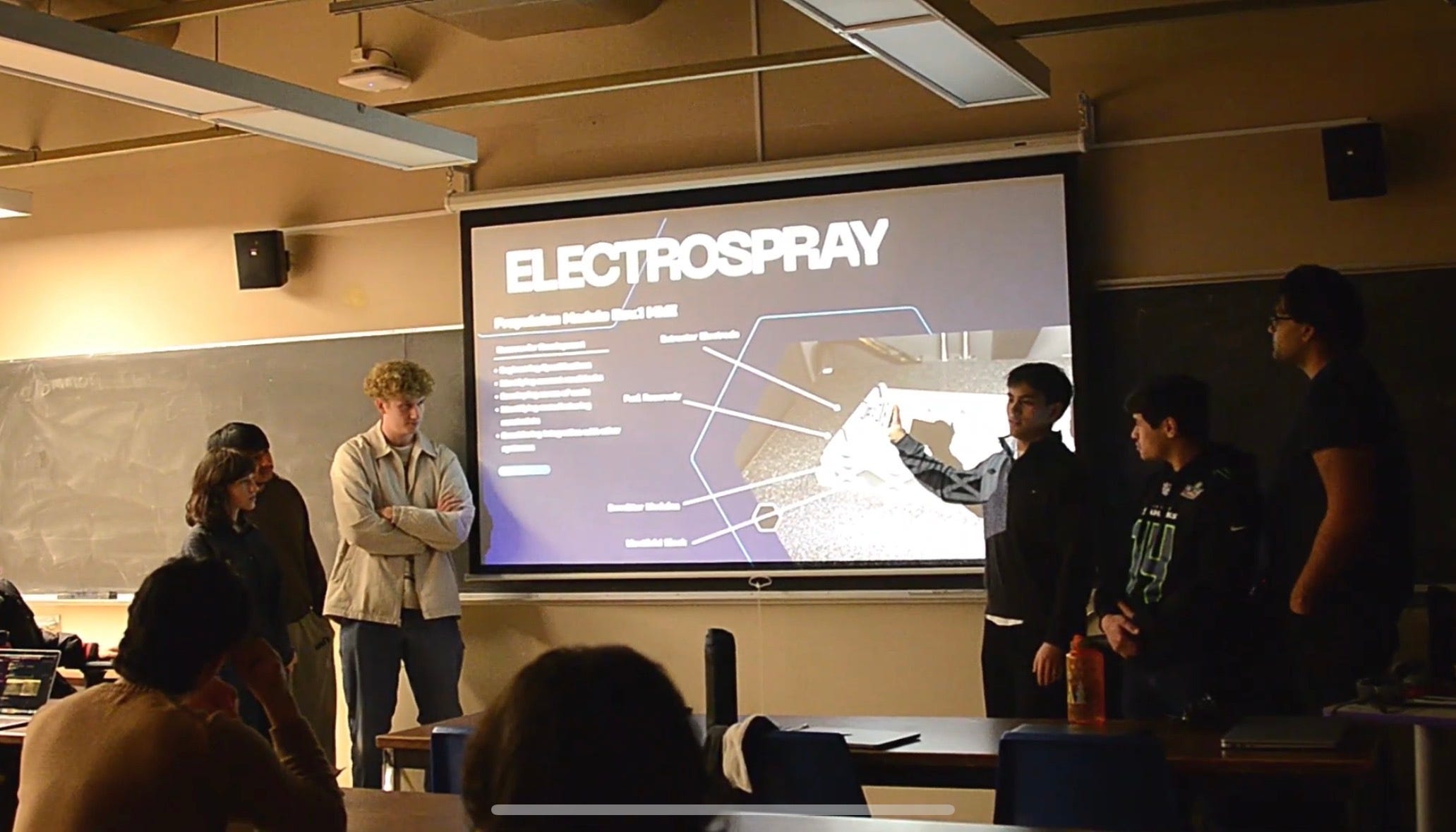
The Propulsion Division had a huge quarter packed with exciting developments and is charging full speed toward some awesome goals this Spring. Over the past quarter, Electrolysis officially kicked into high gear, surpassing two preliminary designs while developing a nearly complete thermodynamic analysis script and expanding the team. The Solar Sail team joined a NASA space competition, the NASA ORBITS Challenge, with the long-term goal of publishing research papers and submitting proposals to secure major NASA-backed funding. Additionally, the team is deep in research and analysis as they work toward their first paper in the coming month. The Hot Gas team completed both a design review and a test readiness review for their superheater (vaporization chamber) proof of concept. They plan to wrap up designs to build a test rig for this critical and complex system component. Meanwhile Electrospray delivered a system concept and design review this quarter while pushing forward on preliminary system design and beginning more advanced fluid analysis, attitude control algorithms, and overall system fidelity improvements. Finally, the Bi-Propellant team focused heavily on engine fluid analysis using NASA CEA, advanced thermodynamic modeling, and the development of innovative propellant feeding system concepts.
Looking ahead to Spring Quarter, the division is shifting towards growth, testing, and deeper technical development across all teams:
Electrolysis and Electrospray are both planning team expansions while continuing to refine their thermodynamic and fluid analysis work
Hot Gas is moving toward building and testing its superheater rig
Solar Sail is pushing to publish its first research paper and advance NASA competition proposals
Bi-Propellant will continue strengthening its engine modeling and feeding system design
Overall, the Propulsion Division is entering Spring with strong momentum, growing teams, and a clear focus on turning complex propulsion concepts into tested and publishable engineering work.
Business Division: Funding, Cameras, Action
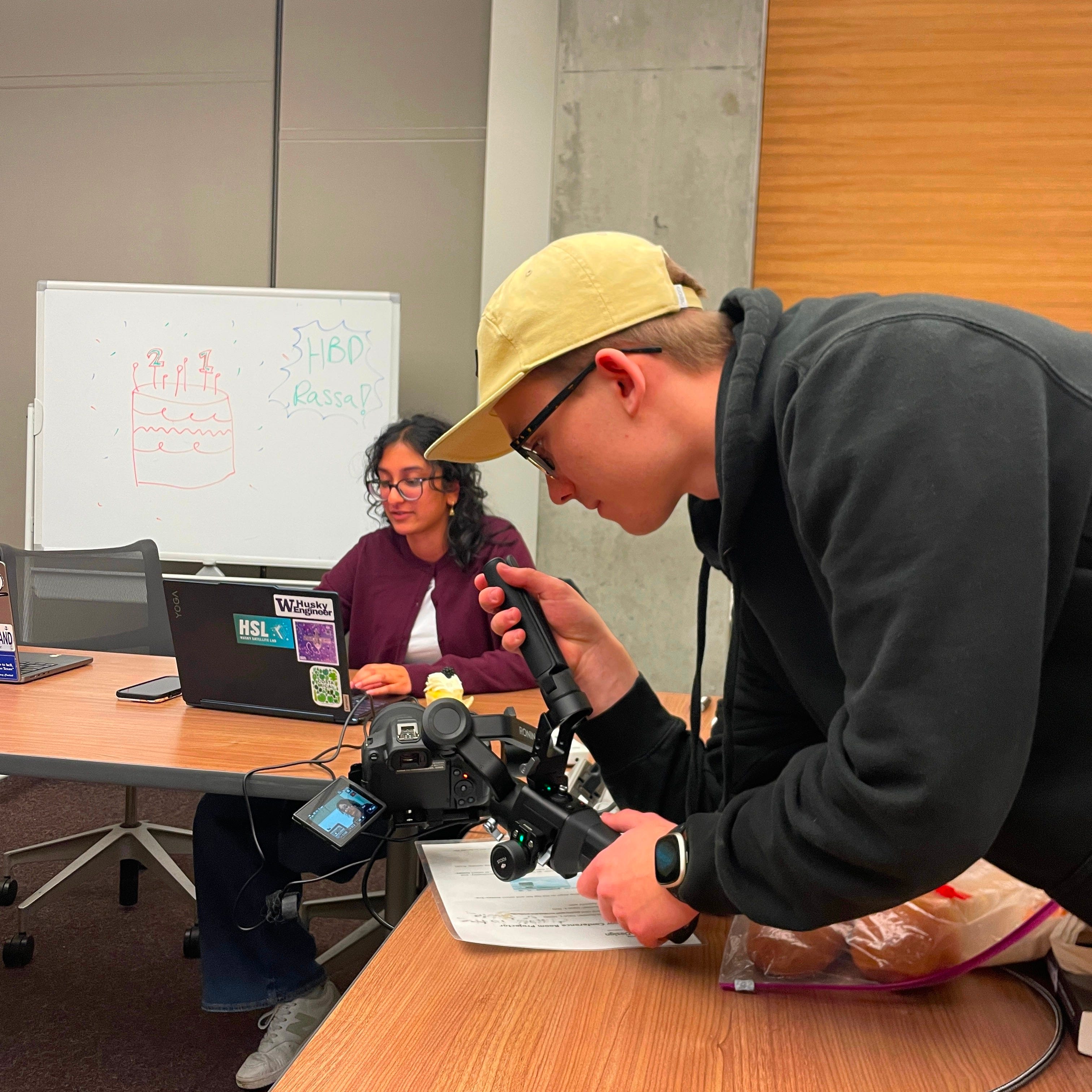
The Business Division has been running at full throttle this past quarter! Right after the holidays, the team launched the HSL Crowdfunding Campaign and completely blew past our $1,000 goal in just one month. To every community member who donated, thank you. We truly could not do this work without your support. To celebrate, we have cookies, stickers, a special video montage, and of course some good old punishments for the Co-Presidents on the way, so keep an eye on our Instagram (@huskysatlab) to see it all unfold.
Beyond crowdfunding, the team also secured industry sponsorships with Blue Origin, Stoke Space, and Janicki Industries. In addition to sponsorships, the lab had the honor to host over 15 engineering and business leads from Safran Aerospace within our lab early March. We are incredibly grateful for these partnerships and for the companies that continue to encourage innovation and student-led engineering at HSL. Their support helps turn big ideas into real systems and real opportunities for our members.
To help showcase all of this amazing work, the Business team has been behind the camera with lights, microphones, and plenty of energy, recording division-specific promotion videos. These videos will highlight the research and development happening across HSL, from propulsion advancements and HS-3 radar systems to HS-2 operations and the behind-the-scenes work that keeps everything moving. Stay tuned later this quarter to get a closer look at the people and technology driving HSL forward.
Community outreach has also been a major focus. HSL Business has been working with partners at The Seattle Museum of Flight and local nonprofits like Degh Tegh Community Kitchens to bring CubeSat technology and space engineering to the Seattle community. Through hands-on engagement and educational events, the team continues to share the excitement of space with students, families, and future engineers across the region.
The division has also been working to build a stronger and more connected lab culture. This quarter featured a new line of HSL merchandise and our quarterly HSL Social Movie Night, complete with a President ice bucket challenge. Yes, it was snowing and raining, and yes, it was every bit as cold as you might imagine 🥶, but it made for a memorable night and plenty of laughs.
Looking ahead to Spring Quarter, the Business Division is not slowing down. The team will continue engaging with the community through UW Admitted Students Day, UW Discovery Days, and additional Seattle Museum of Flight visits. Promotion videos will be wrapped up, new industry partnerships will be pursued, and the division will keep supporting every team at HSL as they push forward with their technologies. The momentum is strong, and the best is still to come!
Ready to Join In With The Team?
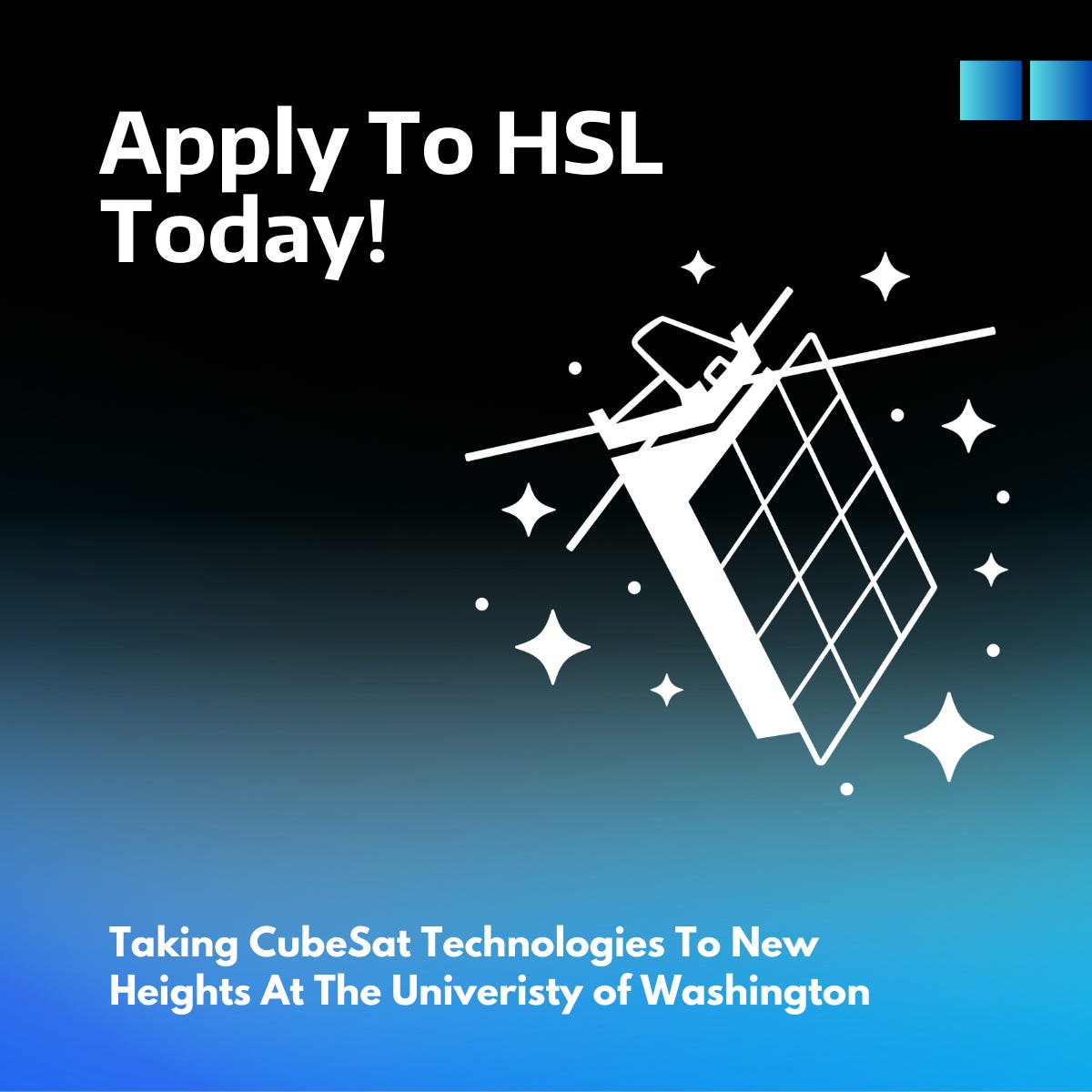
It’s official, Husky Satellite Lab Spring Applications are now open! If you are an undergraduate or graduate student at UW who wants to gain hands on engineering experience, create aerospace industry connections, and push the boundaries of CubeSat technology, apply today via the link below. HS-3, HS-2, and Propulsion Division are the Divisions open to hire and APPLICATIONS ARE ACCEPTED TILL APRIL 5th, 11:59PM.
Well that was A LOT of cool info wasn’t it? But don’t worry, HSL has so much more in store over the next quarter. We can’t wait to continue sharing our news and updates here on the HSL Newsletter.
If you are interested in providing assistance to help us complete our missions, please fill out this interest form.
Thanks for reading Husky Satellite Lab Newsletter! Subscribe for free to receive new posts and stay updated.
There is a lot going on for HSL and a lot of opportunities for students to increase their technical skills, learning abilities and decision making that directly relate to industry. Fun to see!